
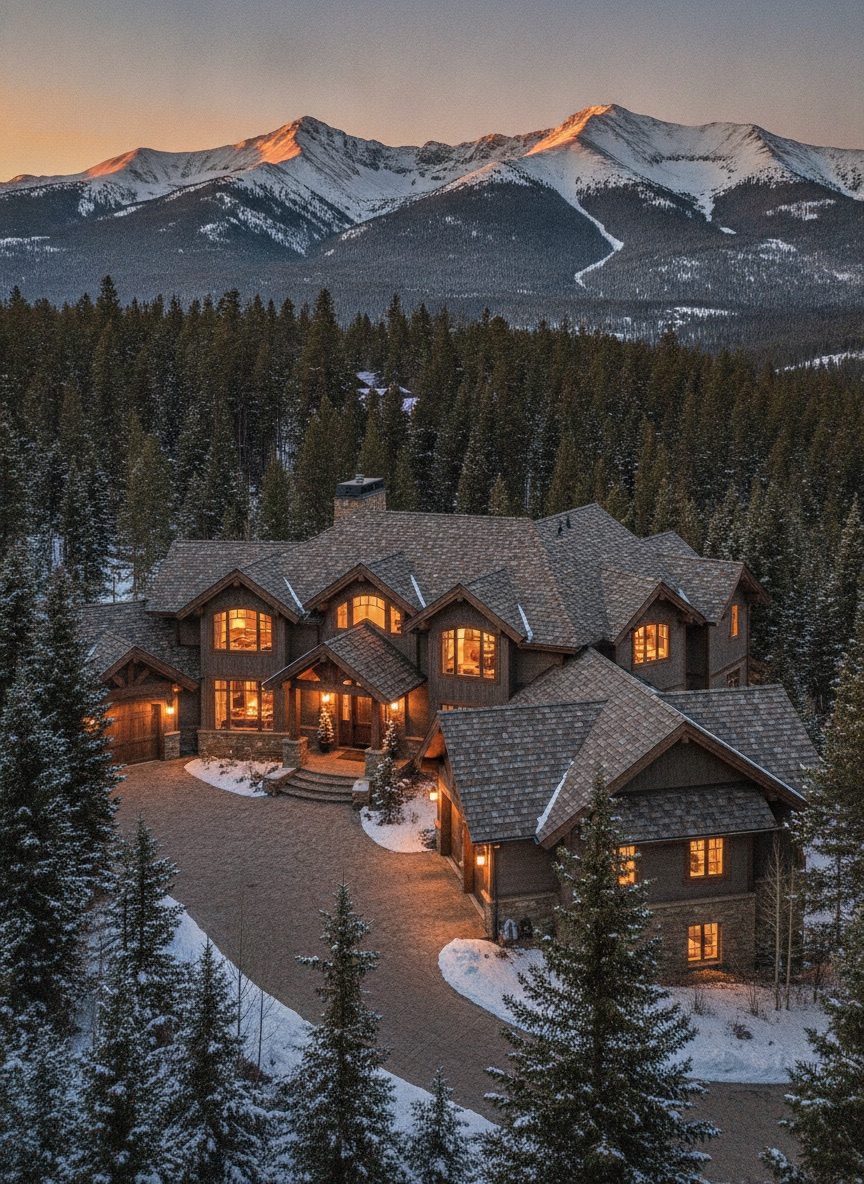
Everything a mountain roof needs, done extremely well.
CHGR Roof Assessment Report™
Give us your address and we prepare your report before we arrive: satellite measurements, storm history, and our expert recommendation. Free, and yours to keep.
Learn more →Residential Reroofing
Premium asphalt, metal, synthetic, and specialty systems designed as complete roofing systems for Colorado's mountain climate.
Learn more →Roof Repair
If a repair is the right answer, we say so. Flashing, seals, wind lifts, leaks: fixed properly, documented, and warrantied.
Learn more →Commercial & Property Management
Offices, churches, retail, multi-family, and property management: scheduling, documentation, and safety with minimal disruption.
Learn more →Hail Damage
Class 4 impact-resistant replacement, granule-loss documentation, and thorough claim-ready documentation.
Learn more →Insurance Claim Help
We document, meet your adjuster on-site, and prepare and manage supplements so every item of real damage is considered.
Learn more →Your roof lives at 7,200+ feet.
It should be built like it.
Mountain homes from the foothills to the ski slopes face a different climate than the Denver metro, and most roofs (and most roofers) aren't prepared for it. We live and work at elevation, and we build for it.
Wildfire resilience
Jefferson County's Wildfire Resiliency Code now requires a Class A roof assembly in its wildland-urban interface, a rule metro roofers seldom have to build to. We adhere to Class A assembly on every roof, with the ember-resistant vents, metal valleys and noncombustible gutters the code calls for.
Violent hail corridors
The Front Range foothills sit in one of North America's most hail-active regions. Class 4 impact resistance is the baseline here, not an upgrade.
Snow load & ice dams
High-country roofs carry multi-ton snow loads for months. Poor ventilation turns melt into ice dams that pry up shingles and flood interiors.
Freeze–thaw cycling
Hundreds of freeze–thaw cycles a year crack sealants, fatigue fasteners, and open seams years before a lowland roof would fail.
High-altitude UV
UV intensity climbs with every thousand feet. At 7,000+ ft, increased UV exposure accelerates asphalt aging and material deterioration.
Chinook & downslope winds
Foothills windstorms regularly top 100 mph, lifting ridge caps and tearing whole shingle courses on exposed slopes.
Falling trees & branches
Heavily wooded lots in Evergreen and Conifer mean impact damage, punctures, and emergency tarping, with documentation your claim will need.
Pine needles & debris
Needle load clogs valleys and gutters, traps moisture, and quietly rots roof edges. Debris management is designed in, not swept off.
Steep, complex rooflines
Multiple valleys, dormers, and long gutter runs concentrate snow and water. Complex flashing and drainage design are non-negotiable, and so are crews equipped for steep work.
Hail, then snow
Mountain roofs often take hail and get buried in snow before repairs can happen, hiding damage, worsening leaks, and complicating claims. Documentation speed matters.
High-elevation installation
Materials behave differently at altitude: seal strips need heat to activate, cold-weather techniques and manufacturer specs decide whether a warranty holds.
Access & logistics
Steep grades, long driveways, and remote sites demand crews and equipment staged for mountain work, not city work.
Most roofers vanish
when the adjuster shows up. We don't.
Peter is a licensed CPA who came up at Goldman and Deloitte before he ever picked up a roofing nail. We know how Xactimate works, how applicable code upgrades should be documented, and how to identify legitimate items that may be missing from an estimate. That's the difference.
From your address to a roofer you keep.
Request your report
Start with your address. We prepare your CHGR Roof Assessment Report™ before we arrive: satellite measurements, roof layout, storm history, and preliminary observations.
On-roof review
We verify the report on your roof and property, then walk you through what we found together, in person or by phone.
Expert recommendation
Repair, replace, monitor, or do nothing. We tell you which and why. If storm damage is real, we explain the insurance road before you commit to anything.
Insurance support
When a claim is the right path we document the damage, meet your adjuster on the roof, and provide supporting information for legitimate missed items. Your carrier makes the decision; we make sure they see everything.
The build
Premium systems installed by mountain crews. Daily communication, property protection, full tear-off, deck inspection, and thorough cleanup: The High Grade Standard™.
Final walkthrough
We walk the finished roof together against a checklist (flashing, ventilation, ridge lines, cleanup) before we call it done.
Your Homeowner Package
Everything in one place: manufacturer and workmanship warranty documentation, final photos, product information, and maintenance recommendations.
Your roofer, for years
Covered by our 10-yr No-Blame Labor Warranty™. If anyone damages your roof, even another contractor, call us first. We're your roofer now.
Just had our first snow of the season and we are all inside, cozy and dry! No more leaks, thanks to our beautiful new roof by Colorado High Grade Roofing. Peter was wonderful to work with and his team was fast, efficient and professional. They removed all the old shake shingles, fixed the damaged areas of the roof and patio, then replaced them with brand new StormFighter Class 4 polymer shingles. When they were finished, the only thing to indicate they were ever there was a beautiful new roof! Peter is involved in the entire project. Easy to contact, very helpful and extremely informative. I wholeheartedly recommend Colorado High Grade Roofing.
Start with your address.
Your CHGR Roof Assessment Report™ is prepared before we arrive: free, documented, and yours to keep. No obligation, no high-pressure pitch.
Questions mountain homeowners ask us.
Service area, response times, insurance, materials and warranty, answered plainly. Anything else: ask us.
What areas does Colorado High Grade Roofing serve?
Colorado's mountain communities across four regions: the Foothills (Evergreen, Golden, Conifer, Morrison, Kittredge, Genesee); the High Country (Idaho Springs, Georgetown, Bailey, Fairplay, Nederland, Black Hawk); Summit County (Breckenridge, Frisco, Silverthorne, Dillon, Keystone, Copper Mountain); Vail Valley (Vail, Avon, Edwards, Beaver Creek, Eagle, Minturn). We also take on projects in the Denver metro. The company is headquartered in Evergreen, Colorado, and crews are staged for elevation work.
How quickly can you inspect my roof?
We call within one business day of your request and are on the roof within 48 hours. Before we arrive we prepare your CHGR Roof Assessment Report™ from satellite measurements and storm history, so the visit confirms rather than starts the assessment.
Is the roof assessment really free?
Yes. The report, the on-roof inspection and the damage documentation are free and carry no obligation. You keep the report whether or not you hire us.
Do you help with insurance claims?
Yes. When storm damage justifies a claim we document it, meet your adjuster on the roof, and provide supporting information for legitimately missed items such as ice-and-water barrier, drip edge and ventilation. Claim decisions are made solely by your insurance carrier; our job is to make sure they see complete evidence.
Can you pay or waive my insurance deductible?
No. Colorado law (Senate Bill 38, the Residential Roofing Bill of Rights) prohibits roofing contractors from paying, waiving or rebating deductibles, and any contractor offering to do so is breaking the law. You also have the right to cancel a roofing contract within 72 hours of signing.
Does my roof need to meet a wildfire code?
If your home is in Jefferson County's wildland-urban interface (WUI) overlay, yes: since July 1, 2026 the county's Wildfire Resiliency Code requires a Class A roof assembly, noncombustible gutters and ember-resistant vents on new roofs and on reroofs affecting 25% or more of the roof. Whether a parcel is on the map varies, so we check it during your assessment. We adhere to Class A assembly on every roof either way.
What roofing materials do you install?
Class 4 impact-resistant architectural shingles, standing-seam metal, stone-coated steel, synthetic slate and shake, and flat-roof membranes. For most mountain homes Class 4 impact resistance is the baseline recommendation because of hail; metal and synthetics are chosen for snow shedding, wildfire resistance and longevity.
What warranty do you offer?
Every roof is covered by our 10-Year No-Blame Labor Warranty™ on workmanship, in addition to the manufacturer's material warranty. If anyone damages your roof, even another contractor, you call us first.
Do you do commercial and HOA roofing?
Yes. Offices, churches, retail, multi-family buildings and property-management portfolios, with board-ready documentation, scheduling around occupants and minimal disruption.
Will you tell me if my roof doesn't need replacing?
Yes. Our recommendation is repair, replace, monitor or do nothing, and we say which and why. Repair-first honesty is one of our five commitments.