Understanding fire ratings: Class A roof assemblies and the mountain WUI code
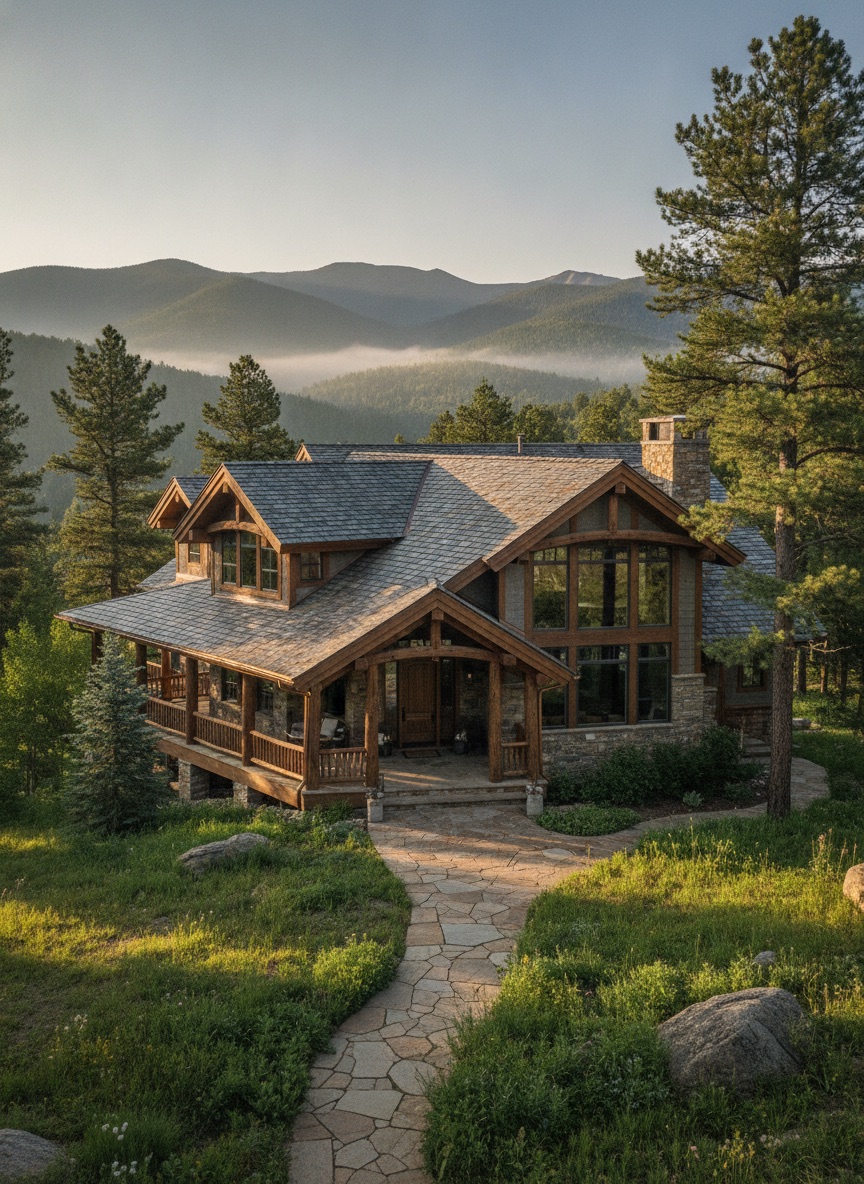
In the foothills, the roof is the largest surface on the house that wind-driven embers land on, which makes its fire rating one of the most important decisions in a reroof. It is also where mountain roofing and Denver roofing now differ most. Since July 1, 2026, Jefferson County's Wildfire Resiliency Code has set rules for roofs in its wildland-urban interface (WUI), and many roofers who mostly work in the metro rarely build to them.
Fire ratings come from one test standard, ASTM E108 (also published as UL 790). It runs three tests: how far flame spreads across the roof, how the roof holds up to repeated flame, and whether a burning brand (a block of burning wood set on the roof) burns through. Class A is rated for severe fire exposure, Class B for moderate exposure and Class C for light exposure. For a wooded mountain lot, Class A is the only rating worth building to.
The detail most homeowners never hear: a fire rating belongs to an assembly, not only to a product. The roof assembly is the covering plus the deck and, often, a specific underlayment or cap sheet. Some materials reach Class A on their own; others are Class A only when installed over the particular underlayment they were tested with, and would rate lower without it. Some synthetic slate and shake products are an example: Class A as a tested system, a lower rating by themselves. A spec sheet that says "Class A" means little unless the roof is installed exactly as the listed assembly.
That distinction is now written into local code. The Jefferson County Wildfire Resiliency Code, adopted by the county in March 2026 and aligned with Colorado's statewide Wildfire Resiliency Code, requires a roof assembly classified as Class A for homes on the county's WUI Overlay District map. That is stricter than the state model, which accepts a Class A covering or assembly. It applies to new construction and to reroofs that affect 25% or more of the roof covering, which is most replacements.
The roof rules go further than the shingle. On mapped parcels the code also calls for noncombustible gutters and downspouts; attic and roof vents that are either listed to the ember-resistance standard ASTM E2886 or covered with noncombustible mesh with openings no larger than 1/8 inch; open valleys lined with 26-gauge metal over a 36-inch cap sheet; tempered or fire-rated skylight glazing; and metal flashing where roof meets wall. Where tile or shake leaves an air space under the covering, that space has to be fire-stopped, capped or covered by a listed Class A assembly.
Whether your home is on the map, and in which tier (Class 1 Interface or Class 2 Intermix), depends on the parcel, so check the county's WUI map or ask us to look it up before you compare bids. Denver has also adopted the state wildfire code, but only for the limited areas on the state map, so most metro roofers seldom have to design around it. Across much of mountain Jefferson County, it now shapes the roof.
Our approach is simple: we build every roof as a Class A assembly, install each system the way it was tested and listed, and document the vents, valleys, gutters and flashing the WUI code calls for, so the permit, the inspection and your insurance file all line up. If you're comparing bids, ask each roofer two questions: is this a listed Class A assembly, and how does your scope meet the county's WUI requirements? A CHGR Roof Assessment Report™ answers both for your home.
Questions about your roof?
Free inspection, photo report, and straight answers within 48 hours.