
Snow load 101: what 300 inches a year does to a roof
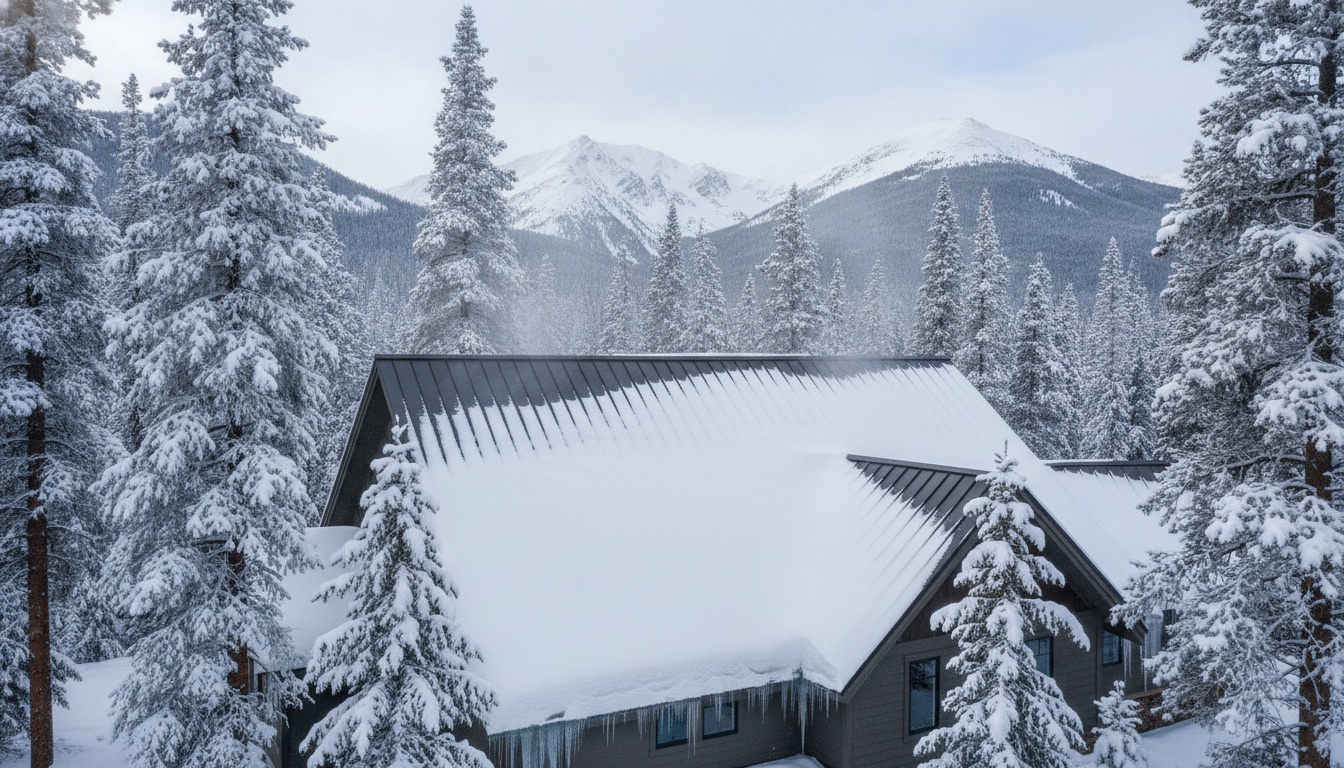
Denver's design snow load is around 30 pounds per square foot. In parts of Summit County it exceeds 100. That's the difference between a roof that sheds an occasional storm and a structure that carries the equivalent of a parked car on every ten-foot square, for months.
Weight is only half the problem. Snow moves. It creeps down the roof plane, bridges over valleys, drifts against dormers and chimneys, and avalanches off steep metal in spring. Each of those behaviors has a design answer: snow retention bars above entries, reinforced valleys, cricket flashing at chimneys, and eave details that survive the freeze line.
Material choice matters more at elevation. Standing-seam metal sheds predictably and carries the longest service life, but needs engineered snow retention. Heavy synthetics handle impact and freeze–thaw well. Standard 3-tab asphalt, still common on older mountain homes, is simply the wrong product above 8,500 feet, and it's usually what we're tearing off after a failure.
If your home is in ski country, ask any bidding roofer two questions: what's the ground snow load at my elevation, and how does your system handle sliding snow over the entries? If the answers are vague, keep bidding.
Questions about your roof?
Free inspection, photo report, and straight answers within 48 hours.