
Ice dams: why mountain roofs leak from the inside
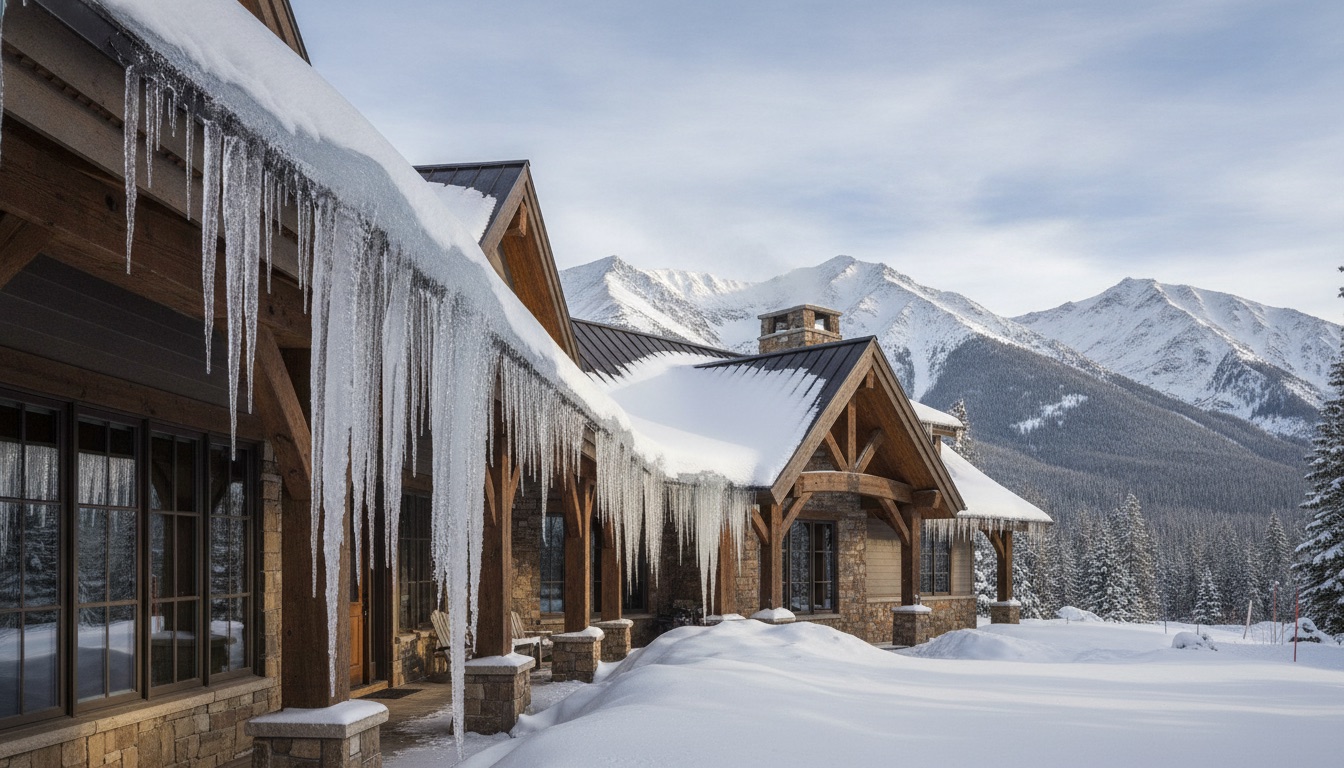
An ice dam starts with heat you can't see. Warm air escaping into an under-insulated attic melts the underside of the snowpack, water runs down the roof plane, and refreezes the moment it crosses the cold eave. Repeat that cycle for a week of freeze–thaw and you have a ridge of solid ice pooling meltwater behind it. That water has nowhere to go but under your shingles.
Mountain homes are especially vulnerable because they combine three ingredients: heavy, persistent snowpack; big day-night temperature swings; and complex rooflines with valleys and dormers where ice concentrates. By the time you see staining on an interior ceiling, water has usually been moving through the assembly for weeks.
Prevention is mostly a ventilation and insulation problem, not a shingle problem. A properly built mountain roof pairs continuous ridge and soffit ventilation with air-sealed attic penetrations, ice-and-water membrane run well past the warm-wall line, and, on problem elevations, properly routed heat cable. Colorado code requires ice barrier on most of our service area; a surprising number of roofs we open up don't have it.
If you're seeing icicles thicker than your wrist, interior staining after cold snaps, or ice building in valleys, book an inspection before spring. When storm-created openings are involved, we document what we find so any repairs can be reviewed with your carrier, and remediation is always cheaper than the drywall, insulation, and mold work that follows another winter of leaks.
Questions about your roof?
Free inspection, photo report, and straight answers within 48 hours.